

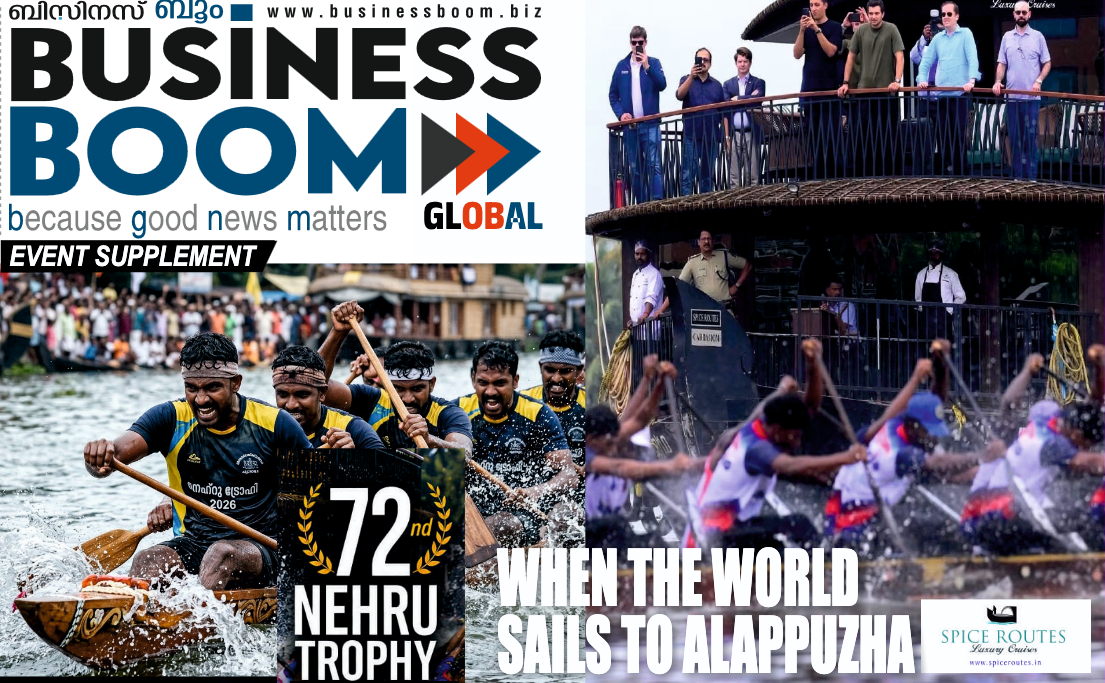
Every year, Punnamada Lake in Alappuzha comes alive with the thunder of oars, the rhythm of traditional vanchippattu, and the cheers of thousands of spectators. The Nehru Trophy Boat Race is far more than a sporting event—it is a powerful celebration of Kerala’s heritage, unity, community spirit and pride.
A tradition born from history
The story of the Nehru Trophy Boat Race began in 1952, when India’s first Prime Minister, Pandit Jawaharlal Nehru, visited Alappuzha. A spectacular boat race was organised in his honour, and he was deeply impressed by the energy, skill and teamwork of the participating crews.
After witnessing the race, Nehru reportedly joined the winning snake boat, Nadubhagam Chundan, in a memorable celebratory moment. Later, he sent a silver trophy bearing his signature for the winners of the event. Over time, the competition came to be known as the Nehru Trophy Boat Race.
The first official Nehru Trophy Boat Race was held in 1954. Since then, it has grown into one of Kerala’s most iconic cultural and sporting spectacles.
Kerala’s Olympics on Water
Held on the scenic waters of Punnamada Lake, the event features majestic chundan vallams, popularly known as snake boats. These long, elegant wooden boats are powered by large teams of oarsmen rowing in perfect rhythm.
The sight is unforgettable: hundreds of oars rise and fall together, traditional songs echo across the water, and the boats surge forward at breathtaking speed. The race demands far more than physical strength. It requires discipline, timing, trust and complete teamwork.
That is why the Nehru Trophy is often described as Kerala’s “Olympics on Water.” A single rower cannot win the race alone. Every person in the boat must move as one, making the event a living symbol of collective effort and unity.
More than a race
For the people of Alappuzha and Kuttanad, a snake boat represents much more than a vessel. It carries the identity, pride and memories of an entire village or community. Boat clubs prepare for months, oarsmen train together, families support the teams, and local communities eagerly wait for race day.
When a boat wins, the celebration belongs not only to the crew but also to the hundreds of people who stand behind them. Victories become part of local history, remembered and retold across generations.
The event also brings people from different social, religious and economic backgrounds together. During preparation, training and celebration, the shared objective is simple: make the boat move faster, together.
A global cultural ambassador
Today, the Nehru Trophy Boat Race attracts visitors from across India and around the world. It gives guests an opportunity to experience Kerala beyond its landscapes—to witness the energy of its people, the depth of its traditions and the strength of its communities.
The race also plays an important role in Alappuzha’s tourism economy. Hotels, resorts, homestays, houseboats, restaurants, transport providers, local shops, photographers and small businesses benefit from the arrival of visitors during the event.
For many travellers, the boat race becomes a gateway to discovering the wider charm of Alappuzha: its backwaters, villages, cuisine, culture and hospitality.
A heartbeat that continues
The Nehru Trophy Boat Race has evolved over the decades, but its emotional core remains unchanged. It is a celebration of heritage, teamwork and human coordination at its finest.
When the first boats appear on Punnamada Lake and the sound of hundreds of oars begins to strike the water, something greater than a competition begins. The lake speaks, the villages celebrate, and Kerala sings with one heartbeat.
That heartbeat is the Nehru Trophy. That heartbeat is Alappuzha. That heartbeat is Kerala.